Poa annua
Annual bluegrass decline on a golf green.  Photo courtesy Tim Steen
Where oh where did the Poa go
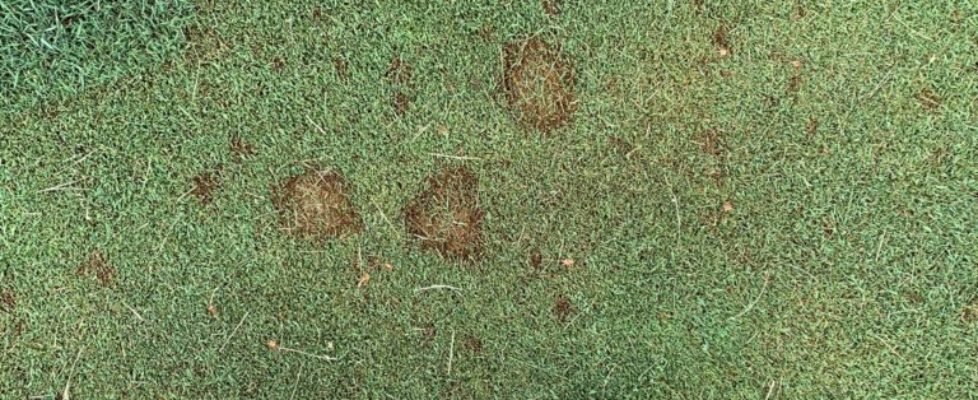
We had an uncharacteristically hot and dry summer here in Ontario and although disease activity as a whole was not high, many superintendents lost a great deal of Poa annua on their greens this season.  Much of the annual bluegrass started to suffer in mid to late July and by August a number of courses had numerous areas that failed.  When samples came into our diagnostic clinic, more often than not, there were no visible signs of pathogens.  However, each sample had similar characteristics: extremely short to non-existent root systems and a significant thatch or mat layer in the upper...
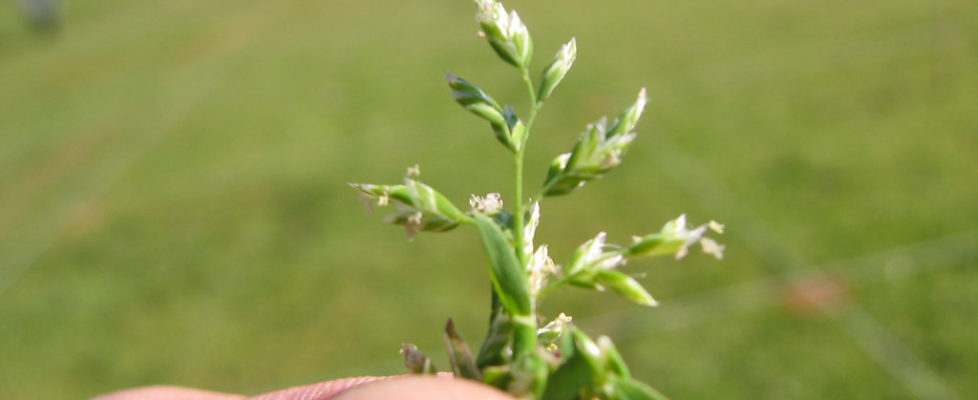
Poa seedheads, basidiomycetes, and the usual suspects
With the recent spell of “warm” weather in combination with relatively high humidity, there were outbreaks of diseases we may typically see in June or even July. I reported a couple of weeks ago that things seemed to be picking up fast on the disease front. However, things seem to have slowed down again…at least for the time being....
Observations from Wisconsin and How Dr. Soldat Would Manage Potassium on Cool-Season Turf
Hello again from the Midwest. Its be a while since I have posted and its because old man winter will not relinquish his grip on us. We have only had the opportunity to rate one of our 5 snow mold sites. Last week three of our sites received another 5 to 12 inches of snow. Where the snow has melted, I am assuming winter kill and breakthrough were minimal. My only metric to assess this is my phone has been eerily quiet. So since I do not have much to report on with respect diseases, I am privileged to post...
Poa annua management strategies (Part 2)
Last week I introduced the topic of annual bluegrass management practices that are gaining momentum in the United States and other parts of the world. While these practices have been met with some controversy, they have also made us as researchers spend a little more time investigating the implications of these practices for golf course superintendents. One program that has emerged among many superintendents (many with a strong voice on twitter including @nccturf, @MinikahdaTurf, among others) is the incorporation of various management techniques that seek to favor the bentgrass over the weaker Poa annua spp. While there is much variation...
Lot's of talk about Poa this spring
Winter damage can be a big problem in Poa. While some golf course superintendents are still seeing the last remaining traces of snow on their turf, most are starting to assess the impact of winter and potential damage. With the predominance of Poa annua as the primary species on many golf courses throughout the region, the potential for winter damage is always high and it appears that the winter of 2010/2011 may be as damaging as that in the summer of “the year that shall not be spoken“. According to a recent Northeast Regional update from the USGA’s Adam Moeller,...
1
Your Adv Here